Which New Construction Upgrades Are Actually Worth It in Southwest Ohio? (And Which Ones Resale Buyers Ignore)
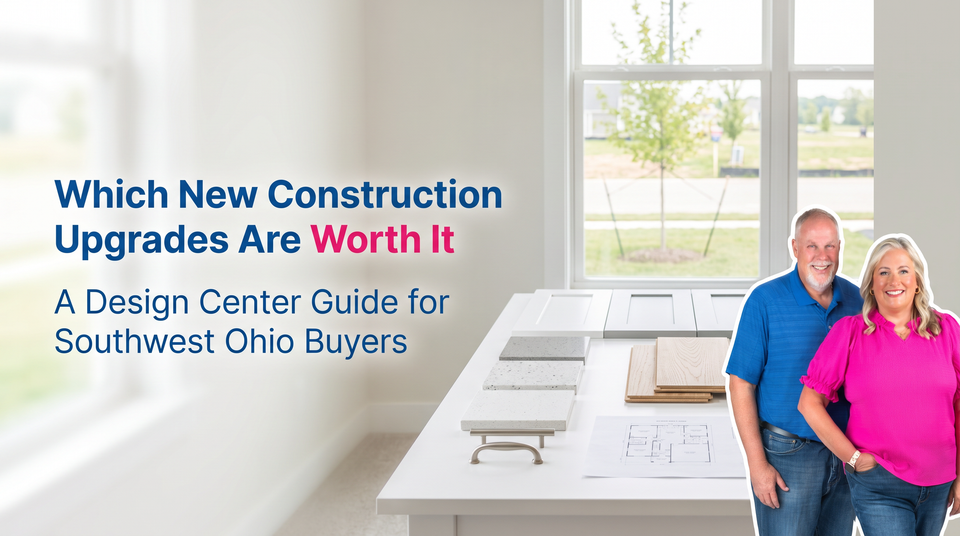
The design center appointment is one of the best days of building a home. It's also where a lot of budgets quietly grow. Every sample looks good, every option has a reason, and by the end of the afternoon a comfortable base price can look very different.
If you're building in Liberty Township, West Chester, Monroe, or anywhere in Southwest Ohio, the useful question isn't which upgrades you like. It's which new construction upgrades are actually worth it: the ones you'll use every day, that are hard to add later, and that future buyers will notice. Below are the five we tell buyers to prioritize, plus the ones that can usually wait. (If you're still deciding whether to bring your own representation to the builder, start with our honest answer to whether you need a real estate agent for new construction.)
Why Upgrade Decisions Matter More Than They Seem
The builder sets the price. Design center pricing comes from the builder, and the same item can cost more there than it would after closing. That's a reason to compare, not to skip everything.
Financed upgrades cost more over time. If upgrades are rolled into your loan, you'll pay interest on them for years. A $20,000 package isn't just $20,000.
Appraisals don't always give full credit. Appraisers compare your home to recent sales. If similar homes nearby don't have the same upgrades, the appraisal may not reflect everything you paid for.
So we use one simple rule: spend where change is hard. Here's what that looks like.
1. Structural Options You Can't Easily Add Later
What it includes. A deeper garage or a third bay, a morning room or sunroom extension, taller ceilings, and larger or additional windows.
Why it's worth it. These are built into the foundation, framing, and roofline. Adding them after closing usually means permits, contractors, and a much bigger bill, if it's possible at all. A light fixture can be swapped in an afternoon. A garage bay can't.
2. Lower-Level Prep for the Basement You'll Finish Someday
What it includes. If your plan has a basement, options like larger or egress windows, a bathroom rough-in, and a taller pour height.
Why it's worth it. Many buyers finish the lower level a few years after moving in. Plumbing in the slab and bigger window openings are inexpensive while the house is going up and disruptive afterward. Doing the prep now keeps that future project simpler and gives you more usable space when you do it.
3. Electrical and Wiring Inside the Walls
What it includes. Extra outlets, ceiling fan and light prewiring, outdoor outlets, and a garage circuit if an electric vehicle charger might be in your future.
Why it's worth it. Before drywall, this work is quick and relatively affordable. After drywall, it means cutting, patching, and painting. Walk each room with your furniture in mind and add wiring where you'll need it.
4. Energy Efficiency You'll Feel Every Month
What it includes. Upgraded insulation, higher-efficiency windows, and a more efficient HVAC system.
Why it's worth it. These choices affect comfort and utility bills every month, and they're sealed inside the walls once the home is finished. Buyers notice them too. In the National Association of Home Builders' 2024 survey, Energy Star windows were among the features most buyers rated essential or desirable, as NAR reported.
5. Layout Choices That Shape How the Home Works
What it includes. A larger kitchen island, a walk-in pantry, a laundry room that fits how you live, and a main-level bedroom with a full bath.
Why it's worth it. Floor plan choices are close to permanent. The same NAHB survey found that a laundry room, a walk-in pantry, and a full bath on the main level were among the most wanted features, so these choices tend to matter to future buyers as well as to you.
What Resale Buyers Ignore (and What They Notice)
Someday you'll sell, and buyers will compare your home with others nearby, including newer homes from the same builder.
Function beats flash. Resale buyers tend to respond to space, storage, and layout. They rarely pay extra for the premium faucet you chose at the design center.
Stay in step with the community. Upgrades that push your home well above what similar homes nearby sell for can be hard to recover. Before you commit, we look at recent resale data in the community so you can see where the ceiling is.
Personal taste ages fastest. Bold tile, trendy colors, and very specific finishes may delight you and narrow your future buyer pool.
Upgrades That Often Make Sense to Skip or Do Later
These are often easier, and sometimes less expensive, to handle after closing:
Light fixtures, faucets, and cabinet hardware. Simple to swap and easy to personalize over time.
Paint colors and accent walls. Paint is one of the most flexible changes you can make.
Backsplash. Often a manageable project once you've lived with the kitchen for a while.
One caution: before planning post-closing work, read your builder warranty. Work on certain systems or components can affect coverage.
How We Help Buyers Decide
We help buyers walk into the design center with a plan instead of a wish list.
Get the full option pricing early. Ask for the complete option and upgrade price list before your appointment, and set a total upgrade budget before you see a single sample.
Sort by "hard to change later." Scott's inspection and defect knowledge helps here. He'll talk through which structural and mechanical choices are worth locking in and which finishes can wait.
Negotiate where it counts. Design center credits and option pricing are often more flexible than the base price. Here's how to negotiate with a home builder without souring the relationship.
Verify the work. Upgrades only matter if they're installed correctly. We recommend independent inspections at key stages, which we explain in why new construction still needs an independent home inspection.
— Cassie Peyton, Monroe, OH · Google review
What This Looks Like in Practice
The following is a composite example drawn from several client situations, shared for illustration only.
A couple building in Liberty Township came to us before their design center appointment with a $35,000 upgrade budget and a long wish list.
We sorted the list together using the five priorities above. Most of the budget went to a deeper garage, larger basement windows with a bathroom rough-in, extra outlets, and upgraded insulation. They chose a mid-level kitchen package and skipped upgraded light fixtures, hardware, and the backsplash, planning to handle those after closing.
They also asked for a design center credit as part of their contract. After move-in, they added the fixtures and backsplash they wanted at their own pace. The hard-to-change choices were already built in, where they belonged.
— Tim Withers, Liberty Twp, OH · Google review
Frequently Asked Questions
Do new construction upgrades increase resale value?
Some help, especially structural, layout, and efficiency choices. Highly personal finishes and upgrades well above what similar homes nearby sell for are harder to recover when you sell.
Should I finance upgrades into my mortgage?
It can make sense for structural items, but you'll pay interest on them for the life of the loan. Compare that cost with paying cash or doing some items after closing.
Can I negotiate upgrade prices with a builder?
Often, yes. Design center credits and option pricing can be more flexible than the base price, depending on the builder and the market.
The Bottom Line on New Construction Upgrades Worth It
The new construction upgrades worth it are usually the ones you can't easily add later and the ones that make the home work better every day. Spend there first, keep finishes in step with the community, and leave room in the budget for changes you'll want once you've lived in the home.
Our new construction buyer representation covers the full process, from the first model visit to the final walk-through. If you're selling your current home to build, you can also check what your current home is worth so your upgrade budget starts from real numbers. When you're ready, book a before-the-model-home consult with Scott and Jill. No pressure, no obligation, just a conversation.
Source: National Association of Home Builders, What Home Buyers Really Want (2024 edition), as reported by NAR on March 1, 2024. Information is deemed reliable but not guaranteed. This post is for general informational purposes only and is not legal, tax, or financial advice. Real estate conditions vary by neighborhood and change over time, so please talk with the appropriate licensed professional about your situation. Scott and Jill Ferguson are licensed REALTORS® with Spouses Who Sell Houses at REAL of Ohio. Equal Housing Opportunity. Market statistics reflect the sources and time periods noted and may have changed since publication. Loan programs and terms vary; confirm details with a licensed lender. Builder policies on buyer-agent registration and compensation vary; confirm them in writing before your first visit. We are not licensed home inspectors; always hire an independent licensed inspector.