How Long Does It Take to Build a New Home in Southwest Ohio? A Realistic Timeline From Contract to Closing
Once you've picked a lot and a floor plan, one question takes over every conversation: when can we move in? It's the right question to ask. That date drives your home sale, rate lock, lease, and moving plans.
So, how long does it take to build a new home in Southwest Ohio? The honest answer is that a to-be-built home usually takes the better part of a year from signed contract to closing, and the date the builder gives you on day one is an estimate, not a promise. Below, we walk through where that time goes, what tends to slow things down in West Chester, Liberty Township, Monroe, and nearby communities, and how to plan so a shifting date doesn't turn into a double move. (If you haven't visited a model home yet, start with whether you need a real estate agent for new construction, since your representation affects how the timeline is written into your contract.)
How Long Does It Take to Build a New Home? What the National Data Says
The most reliable numbers come from the U.S. Census Bureau's Survey of Construction. According to the National Association of Home Builders' analysis of 2025 Census data, a single-family home took an average of 8.8 months from building permit to completion: about 1.4 months from permit to the start of construction, and another 7.4 months to finish.
The averages also vary by how the home is built:
Homes built for sale (a typical production builder community): about 7.4 months from permit to completion.
Custom homes built by a hired contractor: about 11.7 months.
Two things those numbers leave out matter a lot to buyers. First, the clock starts at the permit, not at your signature. The weeks spent on your contract, design selections, and plan approval come before that. Second, completion isn't closing. Final inspections, the walk-through, and the lender's final steps come after.
The New Construction Timeline, Phase by Phase
Most to-be-built homes in our area move through the same stages.
Contract and selections. You sign the purchase agreement, put down your deposit, and visit the design center to choose finishes. Many builders set a firm cutoff for selections. Changes after that point usually cost more and can push the schedule.
Permits and site prep. The builder submits plans to the local building department, and the lot is staked, cleared, and excavated.
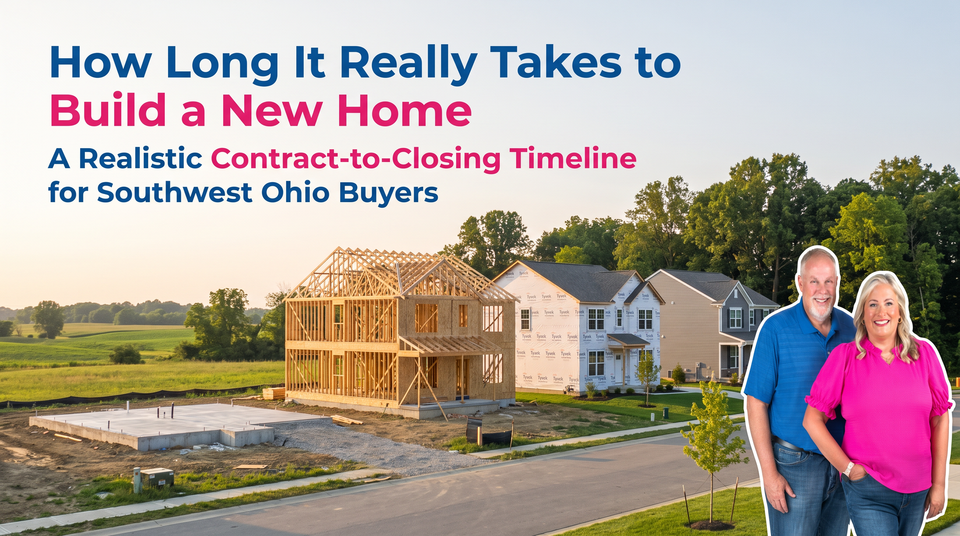
Foundation and framing. Footers, foundation walls, and the basement floor are poured, then the house is framed and covered with roof and windows. This is the stage most affected by weather.
Rough-ins and the pre-drywall inspection. Plumbing, electrical, and HVAC are installed inside the open walls. This is the best moment for an independent inspection, because once drywall goes up, those systems are hidden for good. We explain the full case in our post on why new construction still needs an independent home inspection. Scott's construction and inspection background is especially useful here.
Drywall, finishes, and final inspections. Cabinets, flooring, trim, paint, fixtures, and exterior grading go in, followed by the local final inspection and certificate of occupancy.
Final walk-through and closing. You walk the finished home with the builder, note anything that needs correcting, and close once the lender is ready.
"Scott and Jill have sold two houses for us, both were under clean contracts before they went on the market and they also helped us find land to build our new home. ... They take the time to understand your needs."
— Ron Lutterbie, Goshen, OH · Google review
What Slows a Build Down in Southwest Ohio
Delays are common, and most aren't anyone's fault.
Weather. Ohio winters and wet springs can pause excavation, foundation pours, and exterior work. A home that starts in late fall often has a different pace than one that starts in early summer.
Permits and inspections. Each stage has to pass inspection before the next can begin, and scheduling depends on the local building department's workload.
Late changes. Change orders after the selections cutoff can mean reordering materials and resequencing trades.
Materials and labor. A backordered window package or a busy framing crew can stall a house for weeks.
Financing and appraisal. Your loan, appraisal, and final approval need to line up with the completion date, which takes coordination near the end.
How to Plan Around a Moving Target
You can't control the builder's schedule, but you can control how exposed you are to it.
Get the estimated completion date in writing, and read the delay clause. Most builder contracts give an estimated date and allow extensions for weather, materials, and other causes. Know what your contract says before you sign.
Ask how your rate lock works. A long build can outlast a standard rate lock. Ask the lender how long the lock lasts, what an extension costs, and who pays it.
Match your home sale to the build, not the other way around. If you're selling your current home, the sequence matters. Our guide on how to avoid getting caught between a home sale and a new build walks through options like flexible closing dates and post-closing occupancy.
Ask for regular updates. Find out who your construction contact is and how often you'll hear from them. We track key dates alongside our clients so nothing important slips by.
"Scott and Jill were amazing to work with. From the start to finish and everything in-between. They were helpful with lenders, inspectors, and contractors to make the close process so smooth."
— Chad Pollard, Monroe, OH · Google review
What This Looks Like in Practice
This is a composite, illustrative example, not a specific client.
A couple signs a contract on a to-be-built home in Monroe in early spring. The builder's sales representative estimates about seven months of construction once the permit is issued. They finish selections ahead of the cutoff, and we schedule an independent pre-drywall inspection that catches a few small items while the walls are still open.
A wet spring and a backordered window package push the estimated completion back about five weeks. Because we planned for that from the start, it isn't a crisis. Their current home's sale was set up with a flexible closing date and a short post-closing occupancy, and their lender had already explained what a rate lock extension would cost.
They close a little later than planned and move once.
Frequently Asked Questions
Is a quick move-in home faster than building?
Usually, yes. A home that's already finished or close to it can often close in weeks rather than months, depending on how far along it is and your financing. You'll have fewer choices on finishes.
Can a builder guarantee a completion date?
Rarely. Most builder contracts give an estimated date and allow extensions for weather, materials, and other delays. Read that section carefully before you sign.
When should I list my current home if I'm building?
It depends on your finances, your contract, and the builder's progress. Many buyers wait until the home is further along and the completion date is firmer, then use flexible closing terms to bridge the gap.
Does winter weather really delay construction in Ohio?
It can. Cold, snow, and wet ground can pause excavation, foundation work, and exterior finishes.
Ready to Talk Through Your Build Timeline?
So, how long does it take to build a new home in Southwest Ohio? Usually the better part of a year from contract to closing, and the first date you hear is a target. The buyers who have the smoothest experience understand the phases, plan for delays, and line up their sale, rate lock, and move with room to spare.
If you're thinking about building in West Chester, Liberty Township, Monroe, or nearby, our new construction buyer representation covers the contract, inspections, and timeline with you from the first model home visit to closing. If you'll be selling your current home to build, you can check what your current home is worth. Or book a new construction consult with Scott and Jill. No pressure, no obligation — just a conversation.
Census Bureau data and may not reflect any individual build. This post is for general informational purposes only and is not legal, tax, or financial advice. Real estate conditions vary by neighborhood and change over time, so please talk with the appropriate licensed professional about your situation. Scott and Jill Ferguson are licensed REALTORS® with Spouses Who Sell Houses at REAL of Ohio. Equal Housing Opportunity. Talk with a qualified tax advisor or attorney before making decisions.