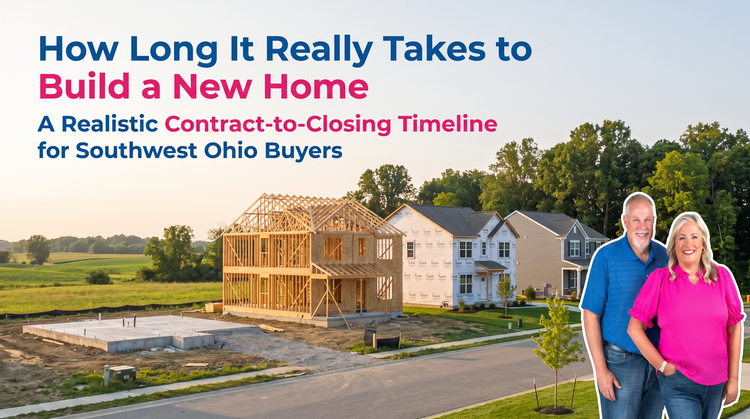
New Construction Is Growing in Monroe and West Chester — Here's What Buyers Are Missing

Drive through Monroe or parts of West Chester Township this fall and you'll see it: fresh streets, model homes with flags out front, and signs announcing the next phase. For a lot of buyers, that growth feels like good news. More choices, brand-new finishes, and no one else's wear and tear.
It is good news. But we've noticed a pattern. Buyers looking at new construction in Monroe and West Chester tend to focus on floor plans and finishes, and miss the parts of the process that shape what they actually pay and how protected they are. None of it is hidden. It just isn't what the model home is built to show you. (If you're still deciding whether to bring your own representation, start with whether you need a real estate agent for new construction.)
Why New Construction in Monroe and West Chester Looks Different Right Now
These two markets are growing in different ways, and that changes what you're comparing.
Monroe is adding whole neighborhoods. Monroe's population more than doubled between 2000 and 2020, from 7,133 to 15,412 residents, and the city approved the final phase of the Monroe Crossings subdivision in 2024, according to WCPO. Buyers here are often choosing between several active communities and builders, and sometimes between a new build and an established resale home a few streets away.
West Chester is mostly built out. New construction here tends to come in smaller pockets: infill single-family streets and townhome communities. Larger long-range plans exist, like the township's 75-acre Mill Creek District near I-75, but officials expect that project to take 7 to 10 years, as FOX19 reported.
So "new construction homes in Monroe" and "new construction in West Chester" can mean very different products, price points, and timelines. That's the first thing buyers miss: the comparison isn't builder vs. builder. It's lot, community, contract, and timeline, all at once.
What Buyers Miss: The Builder's Sales Representative Works for the Builder
The people in the model home are usually friendly, knowledgeable, and helpful. They're also employed by the builder, and their job is to sell the builder's homes on the builder's terms. That isn't a criticism. It's just how the role works.
Registration happens earlier than most buyers expect. Many builders ask you to sign in on your first visit, and some only honor a buyer's agent who is registered at that first visit. Read our guide on what to know before you walk into a builder's model home before you tour, so you keep your options open.
Questions get answered, but not always the ones you didn't think to ask. What's planned on the open land behind the lot? How have this builder's completion dates held up? Which upgrades show up in resale value later? Those are advocate questions, and someone has to be on your side to ask them.
"I really appreciated how supportive, patient, and knowledgeable they were throughout the entire process. They made everything easy to understand, answered all of my questions, and always made me feel like I was in good hands."
— DJ Truesdale, Lebanon, OH · Google review
What Buyers Miss: An Incentive Isn't the Same as a Better Price
Builder incentives are real money, and some are worth taking. But they're designed to move homes, so it pays to look at them the same way you'd look at any offer.
Base price is rarely the final price. Lot premiums, elevation choices, and design-center selections can add up quickly. We compare buyers' options on an all-in basis, including what similar resale homes nearby are selling for.
Rate incentives often come with conditions. Many are tied to the builder's preferred lender, and some are temporary buydowns, where the rate starts low and steps up after the first year or two. Get a Loan Estimate from an outside lender too, and compare the full picture. We cover this in detail in builder lender incentives: perk or pressure tactic?
Timing matters. Many incentives are tied to closing by a certain date, which works well on a finished home and less well if you still need to sell your current one.
What Buyers Miss: New Doesn't Mean You Can Skip Due Diligence
This is the one we see most often. A brand-new home feels like it shouldn't need checking. In practice, it needs a different kind of checking.
There's no seller disclosure form. Ohio's Residential Property Disclosure Form, required for most resale homes under ORC § 5302.30, doesn't apply to new construction that has never been lived in. Your protection comes from the builder contract, the warranty, and your own inspections.
The contract is the builder's document. Builder purchase agreements are usually written by the builder's attorneys, with their own terms on deposits, delays, and changes. Read it before you sign, not after.
Independent inspections still matter. Scott's construction and inspection background is one of the reasons buyers work with us on new builds. Pre-drywall and final inspections by an inspector who works only for you can catch issues while they're still easy to fix.
Check the surroundings. HOA documents, future phases, and what's zoned on nearby land can affect how a home lives and resells. City and township planning records are public, and we'll help you find them.
"Especially as first-time home buyers I was very appreciative that Scott referred us to loan providers, title companies, inspectors, etc that they know and trust rather than us just trying to find all of that on our own, which we learned the hard way can be risky."
— Kristy Scott, Goshen Twp, OH · Google review
What This Looks Like in Practice
This is a composite, illustrative example, not a specific client.
A couple in Liberty Township wants more space and is weighing two paths: a to-be-built single-family home in a Monroe community, or a newer resale home nearby. They call us before visiting any models.
We register with the builder at their first visit. Jill pulls recent resale data so they can compare the new build's all-in price, with lot premium and the upgrades they actually want, against similar homes that recently sold. They get a second Loan Estimate and learn the builder's rate incentive only applies if they close within 60 days, before their current home would realistically sell. Scott reviews the contract's delay and deposit terms and lines up independent inspections.
They still choose the new build. But they negotiate a closing-cost credit instead of the rate incentive, plan the sale of their current home around a realistic build timeline, and go in knowing exactly what they're signing.
Frequently Asked Questions
Do I need my own agent to buy new construction in Monroe or West Chester?
It isn't required, but it's worth considering. The builder's sales representative works for the builder. Your own agent works only for you on pricing, contract terms, incentives, and inspections.
Does it cost more to bring my own agent to a builder?
Often it doesn't. Many builders in our area pay buyer's agent compensation, but policies vary, so confirm the builder's registration rules and compensation in writing before your first visit.
Do I have to use the builder's preferred lender?
Usually not. Some incentives depend on using it, so compare the builder's Loan Estimate with one from an outside lender before deciding.
Do I need an inspection on a brand-new home?
We recommend one. Independent pre-drywall and final inspections can catch installation issues early, while they're still easier for the builder to correct.
Ready to Talk Through New Construction in Monroe or West Chester?
New construction in Monroe and West Chester gives buyers more options than they've had in years. The buyers who do best aren't the ones who find the nicest model. They're the ones who understand the representation, the real price, and the contract before they commit.
If you're starting to look, our new construction buyer representation covers the full process, from first model visit to final walk-through. If you'll be selling your current home to buy, you can also check what your current home is worth. Or book a before-the-model-home consult with Scott and Jill. No pressure, no obligation — just a conversation.
Ohio's Residential Property Disclosure Form requirement and its exemptions are set out in ORC § 5302.30; consult an Ohio real estate attorney with questions about your rights. This post is for general informational purposes only and is not legal, tax, or financial advice. Real estate conditions vary by neighborhood and change over time, so please talk with the appropriate licensed professional about your situation. Scott and Jill Ferguson are licensed REALTORS® with Spouses Who Sell Houses at REAL of Ohio. Equal Housing Opportunity. Builder policies on buyer-agent registration and compensation vary; confirm them in writing before your first visit.