Should You Use a Buyer's Agent for New Construction? Here's What Most People Get Wrong
You've been thinking about building. Maybe you've already driven through a community or two, picked up a brochure, or even bookmarked a floor plan online. And somewhere in the back of your mind, a question keeps surfacing: Do I actually need my own agent for this, or is that just extra?
It's a fair question — and the honest answer is one that most buyers don't hear until after they've already signed something. So let's address it clearly, before you walk into a model home.
The Misconception That Costs Buyers the Most
Here's what a lot of people believe when they walk into a builder's sales office: the person behind the desk is there to help them find the right home. They're friendly. They're knowledgeable about the community. They answer questions well. It feels collaborative.
But the builder's sales representative works for the builder. That's not a criticism — it's just the nature of the relationship. Their job is to sell homes at terms that are favorable to the builder. They're often builder employees, not independently licensed real estate agents acting in a fiduciary capacity. They don't have a legal obligation to put your interests first.
That distinction matters across hundreds of thousands of dollars in decisions.
When you're choosing a lot, selecting structural options, reviewing a purchase agreement, deciding whether to use the builder's preferred lender, or responding to a construction timeline that's slipped by three months — who's looking out for you in those conversations? If you don't have your own representation, the answer is: you are. Alone.
What a Buyer's Agent Actually Does on a New Construction Deal
The value of a buyer's agent on a new construction purchase is different from a resale transaction — and often underestimated because people assume there's "nothing to negotiate" with a builder.
That assumption is wrong.
Here's where a buyer's agent earns their role on a build:
Before you select a community or sign anything. A good buyer's agent helps you evaluate communities before you fall in love with one. That means understanding the builder's reputation, how the purchase agreement is structured, what's included vs. what costs extra, and whether the timing of the build works with your current home's sale. If you have a home to sell, this is also the point where you need to be thinking about sequencing — how the sale and the build connect — before you commit to either.
During the upgrade and selection process. Design center appointments feel exciting. They're also where buyers routinely overspend on upgrades that don't deliver equivalent resale value. An experienced buyer's agent who knows the market can help you make decisions that hold up — and flag the ones that look good on paper but don't pencil out.
At the pre-drywall walk-through. This is one of the most important moments of the entire build. It's the point where structural framing, rough-in plumbing, HVAC, and electrical are all visible — before the walls close. An agent with construction knowledge can walk through alongside you and your independent inspector, helping translate what you're seeing and flagging items that need to be addressed before they're buried behind drywall.
Through contract review and builder negotiations. Builder purchase agreements are long, and they're written by the builder's attorneys. An independent inspection, a dispute over a construction defect, a change in closing timeline, or a request to substitute materials all create moments where someone needs to advocate on your behalf. Your buyer's agent does that. The builder's rep does not.
Through closing. Final walk-throughs on new construction have a specific rhythm — punch lists, open items, builder warranties, and sometimes last-minute changes. Having someone in your corner who knows what to look for and isn't anxious to get to the closing table makes a meaningful difference.
The Timing Question Nobody Warns You About
Here's the part that catches buyers off guard: in most cases, your buyer's agent needs to be registered with the builder before or during your very first visit to a model home or sales office. Not the second visit. Not after you've started having conversations. The first one.
Builders generally track buyer registration from the initial point of contact. If you walk in unrepresented, engage with the builder's sales team, and then try to bring in a buyer's agent later, many builders won't recognize that agent's involvement — which means your agent can't be compensated by the builder, and the dynamic of the entire relationship changes.
This isn't a technicality to work around. It's the single most important logistical fact about new construction buyer representation, and most buyers don't find out until they've already made it moot.
In the Cincinnati–Dayton corridor — across West Chester, Liberty Township, Monroe, Mason, Springboro, and the communities stretching up I-75 — active builder communities from Fischer Homes, M/I Homes, Ryan Homes, Drees, and regional custom builders all operate under registration rules. The specifics vary slightly by builder, but the principle holds everywhere: call your agent first.
"Doesn't a Buyer's Agent Just Add Cost?"
This comes up often, and it deserves a direct answer: in most new construction transactions, buyer representation is already priced into the builder's cost structure. You don't pay your agent separately. The builder compensates your buyer's agent from the transaction — at no additional cost to you.
In other words, walking in without representation doesn't save you money. It just means you've given up the advocate you were already entitled to.
What This Looks Like in Practice
We recently worked with a couple in the Monroe area who came to us to list their current home. During our initial conversation, we learned they'd already visited two model homes in a new community and had a follow-up appointment scheduled. They hadn't signed anything yet, so we were able to step in, get registered with the builder, and be present for the next appointment.
Over the following months, we guided them through lot selection, helped them navigate the design center without over-spending on upgrades that wouldn't hold value, attended the pre-drywall walk-through with their independent inspector, and negotiated a punch-list resolution before closing. We also coordinated the timing so their current home sold with enough runway to avoid a gap or a rushed double-move.
They told us afterward that they didn't realize how much was happening behind the scenes until they saw us in action. That's how it should work — calm, organized, no surprises.
Clients who didn't call us first? We've had those conversations too. A family finds out at their listing appointment that they signed a purchase agreement six months ago without representation. The agreement is already executed. The build is already underway. There's very little we can do at that point to fix what's already locked in.
The gap isn't malicious. It's just a blind spot — people know to call us when they're ready to sell the house they're leaving. They don't always know to call us before they walk into the model home for the house they're building.
How We Represent New Construction Buyers in Southwest Ohio
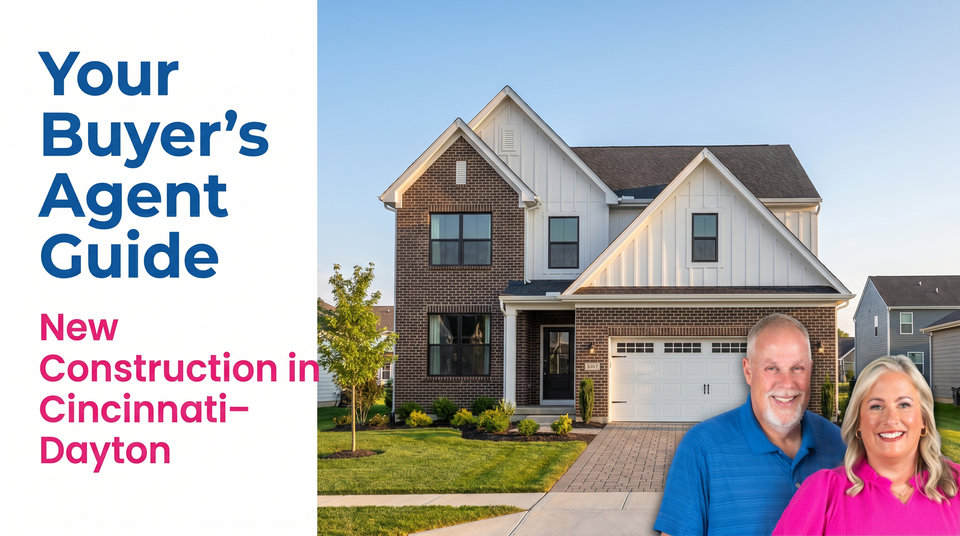
Scott and Jill Ferguson have represented new construction buyers consistently for over a decade across the Cincinnati–Dayton corridor — in communities from Monroe Crossings and Caravel in Liberty Township to Mason, Springboro, and beyond. Our experience spans multiple builders, price ranges from the mid-$500s into the $1.2M range, and nearly every type of build situation: move-up buyers with an existing home to sell, right-sizing buyers selecting a new ranch or patio home, and buyers choosing new construction over resale in a competitive market.
Scott's background in construction and home inspections brings specific technical depth to the pre-drywall walk and defect negotiation process — not just general knowledge, but hands-on familiarity with what's behind the walls and what needs to be addressed before it's too late to address it. You can learn more about how we approach full buyer advocacy on our new construction service page.
If you're also selling a home while building, we coordinate both sides — so you're not managing two separate transactions with two separate timelines and no one connecting the dots. Our guide to navigating a simultaneous sale and purchase in Cincinnati–Dayton walks through how that process works in practice.
Frequently Asked Questions
Do I need a buyer's agent for new construction in Ohio? You're not legally required to have one, but the builder's sales representative works for the builder and has no fiduciary obligation to you. A buyer's agent represents your interests only — through contract review, upgrade decisions, the pre-drywall walk-through, and negotiations. In most cases, buyer representation costs you nothing additional because it's already priced into the builder's cost structure.
When do I need to register my buyer's agent with the builder? In most cases, your agent needs to be registered before or during your very first visit to the builder's model home or sales office. Builder registration rules vary slightly, but the principle is consistent: the earlier the better, and the first visit is often the cutoff. Waiting until later in the process can disqualify your agent from representation and compensation.
Can I negotiate with a new construction builder? Yes — more than most buyers realize. Price is often less flexible than in resale, but builders regularly negotiate on lot premiums, structural upgrades, design center allowances, closing cost contributions, and mortgage rate buy-downs. An experienced buyer's agent knows where builders typically have room and how to approach those conversations.
What is a pre-drywall inspection and why does it matter? A pre-drywall inspection takes place after the structural framing, plumbing, HVAC, and electrical rough-ins are complete — but before the insulation and drywall are installed. It's your best opportunity to see how the home is being built and identify any issues while they're still visible and correctable. This is one of the most valuable steps in the new construction process, and it's one your buyer's agent should be present for.
Should I use the builder's preferred lender? You're not required to, and you should compare options. Builders frequently offer meaningful incentives — rate buy-downs, closing cost credits, upgrade allowances — tied to using their preferred lender. An experienced buyer's agent can help you evaluate whether those incentives outweigh the value of shopping independently, or whether the numbers favor going elsewhere.
What happens if I already visited a builder's model without an agent? It depends on the builder and how far the conversation has progressed. If you haven't signed anything yet, contact an agent immediately — there may still be a path to representation depending on the builder's policy. If you've already executed a purchase agreement, your options narrow significantly. This is exactly why the timing matters so much — before the first visit is always the right call.
The Next Step Is a Conversation
If you're thinking about building — or you're already in the research phase and haven't yet committed to a community — the most useful thing you can do right now is have a conversation with a buyer's agent before your next model home visit.
We're happy to talk through your situation, answer questions about specific communities in the Cincinnati–Dayton corridor, and help you understand what the process looks like from here. No pressure, no obligation. If you have a home to sell as part of this move, we can help you think through the timing on that side as well — including a home valuation if you want to understand what your current equity position looks like before you commit to a build.
For answers to some of the most common questions new construction buyers have about representation, our post on whether you need a real estate agent for new construction is a good place to start. And if you want to understand the full scope of what a buyer's agent actually does on a build from contract to close, this post on buyer's agent roles in new construction walks through it step by step.
When you're ready to talk, reach out here — we'll make time.
The information in this post is intended for general educational purposes and reflects our experience representing buyers and sellers in the Cincinnati–Dayton market. Real estate transactions involve individual circumstances that vary by situation. We recommend consulting with a licensed real estate professional and, where appropriate, a real estate attorney before making decisions about any purchase or sale.