Is the Builder's Rep on Your Side? The Honest Answer
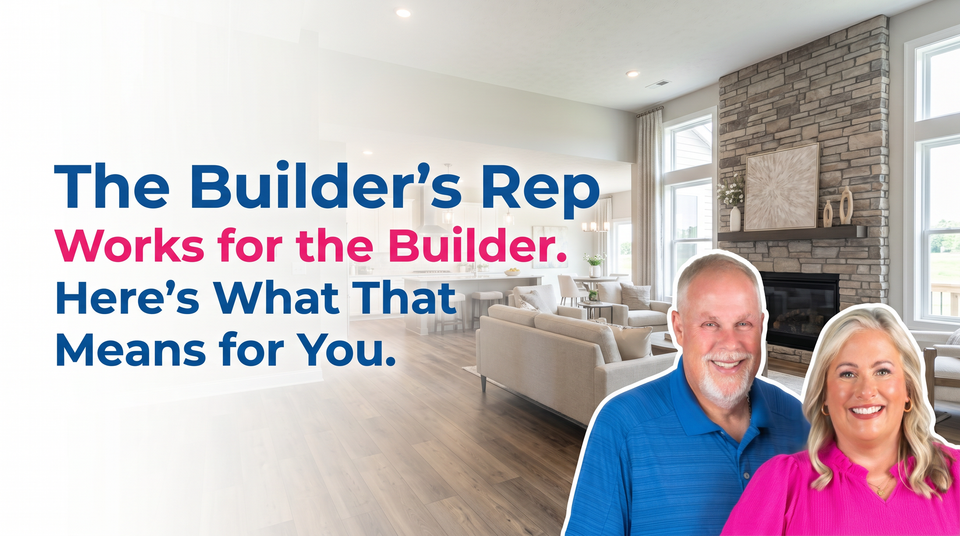
You walk into a model home on a Saturday afternoon. It smells like fresh paint and possibility. The sales rep greets you by name, hands you a floor plan booklet, and starts walking you through upgrade options, lot premiums, and incentive packages. They seem helpful, knowledgeable, and genuinely nice.
So here's a question most buyers don't think to ask until it's too late: Who does that person work for?
The answer matters more than you might expect — and it's different from what most people assume when they walk through that door.
The Builder's Rep Has One Client — and It Isn't You
The sales representative you meet in a new construction model home is employed by the builder — in Ohio, they are typically not licensed real estate agents at all. Their job is to sell the builder's homes at the best possible terms for the builder. That's not a criticism — it's simply how the relationship is structured. They are not your representative. They are not your advisor. They have no legal obligation to put your interests first.
This distinction matters enormously when you're making decisions that can add up to hundreds of thousands of dollars — lot selection, structural upgrades, option packages, contract terms, closing timelines, and the fine print buried in a builder's purchase agreement.
A builder's sales rep is typically warm, professional, and genuinely good at their job. But their job and your interests are not the same thing. They're not going to volunteer that a particular lot has a drainage issue. They're not going to tell you which upgrades deliver the least value at resale. They're not going to advise you to wait until the end of the quarter, when builders sometimes offer better incentives to hit volume targets. And they're not going to negotiate against their own employer on your behalf.
None of that is a flaw in their character. It's simply the nature of who they represent.
What a Buyer's Agent Actually Does in a New Construction Deal
A buyer's agent — one who represents you, not the builder — serves an entirely different function. Here's what genuine representation looks like throughout a new construction purchase:
Before you visit a model home. A good buyer's agent should be involved before you ever walk into a sales center. That means helping you evaluate which communities and builders align with your goals, what lot options are worth a premium, what to look for in a builder's contract, and how your current home factors into the timing if you're also selling. In the Cincinnati–Dayton corridor, we've represented buyers across a wide range of builders in West Chester, Liberty Township, Monroe, Mason, and Springboro — which means we understand how different builders operate and what to watch for in each situation.
During contract review. Builder contracts are written by the builder's legal team — and they're written to protect the builder. Earnest money terms, change-order clauses, completion date language, and warranty provisions all deserve a careful read. Your agent should be helping you understand what you're signing, not just where to sign.
Through the build itself. Representation doesn't end at contract. We attend ground-breaking, walk pre-drywall inspections (the point where structural and mechanical work is still visible and correctable), and flag issues before they're hidden behind drywall. By the time a home is finished, you've lost access to most of what's inside the walls — the time to catch problems is before the walls close.
At final walk-through and closing. A buyer's agent advocates for you to the end — documenting punch list items, pushing back on incomplete work, and making sure the home you're closing on matches what you contracted for.
The Misconception We See All the Time
Here's the scenario we encounter regularly: A client calls us to list the home they're moving out of. During that conversation, we learn they already visited a model home, loved the community, and are now three months into a build — without their own representation.
They knew to call us when it was time to sell. It never occurred to them to call us before they walked into the model home.
The assumption, almost universally, is that the builder's rep was looking out for them. And in many cases, these clients are smart, experienced people who wouldn't walk into most financial decisions without someone in their corner. New construction just has this particular blind spot — the model home environment is designed to feel warm, helpful, and low-pressure, which can make it easy to forget that it is, fundamentally, a sales environment.
By the time we get the listing call, the purchase is done. And we're left thinking: if they'd called us six months earlier, we could have been with them for both sides of this.
Who Pays the Buyer's Agent?
This is one of the most common questions, especially after the commission changes that took effect across the industry in 2024. The short answer: it varies by builder and by situation, and it's something to clarify upfront.
Many builders in our market continue to offer buyer agent compensation — they recognize that a buyer who comes in with their own representation is often a smoother transaction. Others have adjusted their policies. In either case, this is a conversation to have with your agent before you visit, not after.
Even in situations where you're responsible for your agent's fee, the value of real representation across a $600,000–$900,000 purchase tends to be significant. The upgrade selections alone — where buyers often spend $50,000–$150,000 beyond base price — benefit from outside perspective and resale-value guidance that a builder's rep simply isn't positioned to provide.
What This Looks Like in Practice
We recently worked with a couple in the Monroe area who were considering a new build at Monroe Crossings while also preparing to sell their existing home. They reached out to us before they'd signed anything — which made all the difference.
We helped them evaluate the lot options available (not all lots in that community are equal), reviewed the builder's contract language with them, and helped them think through the upgrade selections that actually hold value at resale versus the ones that feel exciting in the moment but don't move the needle for future buyers. On the sell side, we handled the listing and coordinated the timing so they weren't carrying two mortgages or in a rush to close.
Having one team manage both sides meant no gaps, no missed communications, and no pressure to rush either transaction to make the other one work.
A Few Questions Worth Asking Before You Visit a Builder
If you're considering new construction — whether you're a move-up buyer, a right-sizer looking at a ranch or patio home, or someone exploring a specific community — here are the questions worth having answered before you step into a model home:
Do I have representation in place? If not, bring an agent to your first visit. Most builders require agent registration at or before your first visit — you generally can't add representation after initial contact.
Is my current home part of the equation? If you're selling to fund the build, timing matters enormously. Understand your options before you're committed to a completion date.
What's my budget for upgrades? Base prices are marketing prices. What you actually spend in the design center is typically 15–25% above base. Go in with a number in mind and someone helping you prioritize.
When is the right time to buy from this builder? Quarter-end and year-end timing can affect what incentives are available. An agent who works regularly with new construction will know this.
Frequently Asked Questions
Is the builder's sales rep a licensed real estate agent in Ohio? Not necessarily. In Ohio, builder sales reps are typically employees of the builder — not licensed real estate agents. They are not operating under a fiduciary duty to you and are not governed by the same professional standards as a licensed REALTOR®. Their obligation is to the builder.
Can I bring in a buyer's agent after I've already visited the model home? Many builders require agent registration at or before the first visit and will not allow you to add representation after that point. It varies by builder, but the general rule is: bring your agent before your first serious visit, not after.
Does using a buyer's agent cost me more? Not necessarily. Builder compensation policies vary, and the commission landscape has shifted in recent years. But even where a buyer bears some of that cost, the representation typically pays for itself across the decisions made during a build.
What does a buyer's agent actually do that the builder's rep doesn't? The builder's rep guides you through the builder's process, products, and options. Your buyer's agent helps you evaluate whether those options are in your best interest — and advocates for you when they aren't. These are fundamentally different roles.
When should I contact a buyer's agent if I'm considering new construction? Before you visit a model home — ideally before you've even decided which communities to tour. Early involvement means your agent can help you evaluate options before you're emotionally attached to one.
If you're thinking about a new construction purchase in the Cincinnati–Dayton area — or if you're in that common situation of needing to sell your current home before or during a build — we'd be glad to talk through your situation before you commit to anything.
We've represented new construction buyers throughout Southwest Ohio for over a decade, across communities in Monroe, West Chester, Liberty Township, Mason, and Springboro. We know the builders, the contracts, and what to watch for at each stage of the process. And if you have a home to sell, we can handle both sides under one roof so nothing falls through the gap.
Reach out here when you're ready to talk — no pressure, no obligation. Just a conversation about your options before you sign anything.
Scott & Jill Ferguson are licensed REALTORS® with Real Broker (Real of Ohio) serving the Cincinnati–Dayton corridor. This post is for informational purposes only and does not constitute legal or financial advice. Compensation structures, builder policies, and market conditions vary and are subject to change. Consult a licensed real estate professional for guidance specific to your situation.