Your First Home in West Chester Is the Foundation for Your Next One — Here's How to Build Equity the Right Way
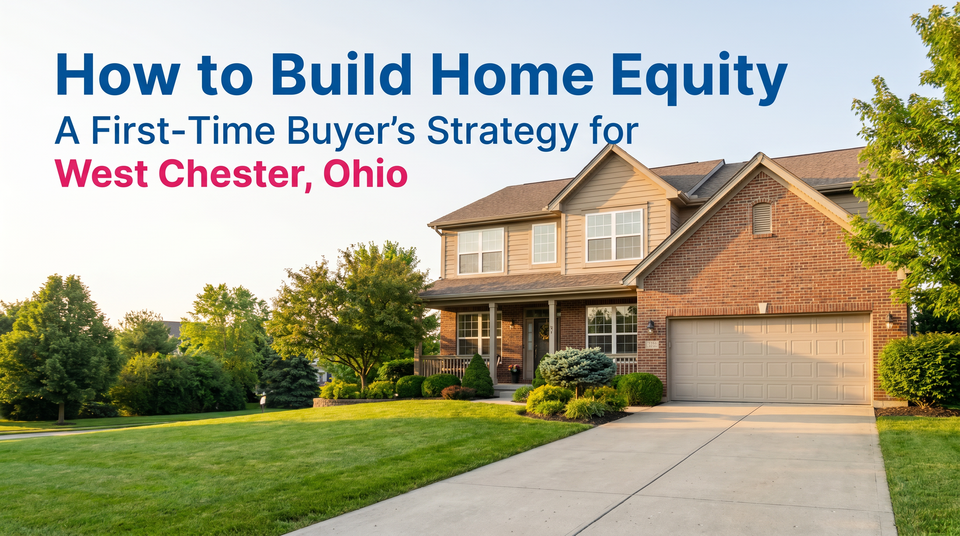
Most people buying their first home in West Chester are thinking about the present: the right neighborhood, the right school district, the right floor plan for where they are right now. That's understandable — it's a significant purchase, and getting it right matters.
But here's what the most financially prepared homeowners understand from the start: your first home isn't just shelter. It's the seed capital for your next move.
The equity you build in the next five to ten years — through smart purchase decisions, consistent payments, and thoughtful improvements — is what funds your down payment when you're ready to move up. It's what gives you negotiating power. It's what turns the stress of a simultaneous buy-sell into a manageable, well-capitalized transition rather than a logistical scramble.
If you're buying your first home in West Chester, Mason, or Liberty Township, this guide will help you think about equity not as an abstract concept but as a practical goal — one you can build intentionally, starting now.
What Equity Actually Is (And Why It Compounds)
Equity is the difference between what your home is worth and what you owe on it. Simple enough.
What's less obvious is how it grows. There are two engines working simultaneously: principal paydown (every mortgage payment reduces your loan balance slightly) and market appreciation (your home's value rises over time, independent of anything you do).
In the early years of a 30-year loan, most of each payment goes toward interest — not principal. That means the "paydown" engine is running slowly at first. But the appreciation engine doesn't care about your amortization schedule. It runs based on market conditions.
West Chester has been a strong market on that front. As of October 2025, the average home value in West Chester was approximately $408,000, reflecting roughly 4.1% annual appreciation. That kind of steady, compounding growth — not explosive, not speculative, just reliable — is exactly what long-term equity building is built on.
The practical implication: in a market like West Chester, a well-chosen first home can generate meaningful equity through appreciation alone over a five- to seven-year hold period, even if you never make a single extra mortgage payment.
But "well-chosen" is doing a lot of work in that sentence.
Start With the Right Purchase Decision
Equity building starts before you sign anything. The decisions you make at purchase — price, condition, location, and loan structure — set the ceiling on how much equity you can build and how fast.
Buy below your maximum approval. One of the most common mistakes first-time buyers make is treating their lender's maximum approval number as a target. It isn't. Leaving room in your budget gives you the ability to make extra principal payments when possible, handle maintenance without financial stress, and avoid being "house poor" for years.
Prioritize location over finishes. A home with dated countertops in a strong neighborhood will appreciate. A home with new countertops in a weak neighborhood often won't. In the West Chester corridor, neighborhoods with walkable amenities, access to major employers, and top-rated Lakota schools have historically held and grown value reliably.
Think about resale from day one. You don't have to plan your exit before you move in — but you should make sure your first home makes sense as a future resale. Unusual floor plans, deferred maintenance, or lot challenges that you're willing to live with may not appeal to buyers when you're ready to move up. The goal is a home that works for you now and has broad appeal later.
Accelerate Principal Paydown Without Overextending
Once you're in the home, there are simple, low-risk ways to reduce your loan balance faster than the standard amortization schedule.
Make one extra principal payment per year. On a 30-year mortgage, a single additional payment per year can shave years off your loan term and meaningfully increase your equity position over a five-to-ten year hold.
Switch to bi-weekly payments. Paying half your monthly mortgage every two weeks instead of one full payment monthly results in 26 half-payments — the equivalent of 13 full monthly payments instead of 12. This is essentially free acceleration built into your payment structure.
Apply windfalls to principal. Tax refunds, bonuses, and any other lump-sum income applied directly to principal can have an outsized effect in the early years of a loan, when the amortization schedule is most interest-heavy.
A note of caution: before aggressively paying down a 6–7% mortgage, make sure you've addressed higher-interest debt and have a solid emergency reserve. Financial advisors generally recommend maintaining three to six months of expenses before accelerating mortgage principal payments. Equity locked in your home isn't liquid — you need accessible cash as a buffer.
Choose Improvements That Create Value, Not Just Comfort
Not every home improvement adds resale value. Some are pure lifestyle upgrades that buyers won't pay a premium for. Others are genuine value creators that improve both your enjoyment and your equity position when it's time to sell.
The improvements most likely to deliver meaningful return in the West Chester market:
Kitchen updates, not full renovations. You don't need a complete gut job. Updated hardware, new appliances, and refreshed countertops in a functional layout typically return well in the $350K–$500K price range.
Curb appeal. First impressions drive offers. Fresh landscaping, exterior paint or power washing, and a clean entry make a demonstrable difference in buyer perception — and in how quickly a home sells when the time comes.
Bathrooms over bedrooms. Cosmetic bathroom updates (vanity, lighting, tile) consistently outperform bedroom additions in terms of cost-to-value ratio.
Systems and maintenance over amenities. An HVAC system, roof, or water heater in excellent condition is invisible to a buyer walking through — but it's very visible in an inspection report. Deferred maintenance on systems is one of the most common ways sellers lose equity at the negotiating table. Staying current on maintenance protects the equity you've built.
The governing principle: improvements should match neighborhood norms. Over-improving beyond the ceiling your neighborhood supports is a common and costly mistake for first-time homeowners. Scott's background in construction and inspections gives our buyer clients a useful read on which improvements are likely to add value vs. which are personal preferences with limited resale upside — an honest, data-grounded perspective that helps buyers make decisions they'll feel good about years later.
Understand the Local Market — It Works With You
Individual decisions matter, but local market conditions are the tide that lifts (or lowers) all boats. Knowing what's happening in West Chester specifically helps you make better decisions about timing, improvements, and when you might be positioned to move up.
A few things worth knowing about the current West Chester market:
West Chester's 2026 real estate forecast points toward modest appreciation of 3–5%, with homes taking slightly longer to sell — signaling a shift toward a more balanced market. A balanced market is generally favorable for informed buyers who aren't competing blindly — there's room for due diligence, inspection negotiations, and thoughtful decision-making.
West Chester Township's median home price is approximately $410,000, reflecting roughly 6.5% year-over-year growth as of mid-2025. For a buyer purchasing in that range today, even modest appreciation compounds meaningfully over five to seven years.
If you're curious what your home might be worth — or could be worth — once you've made improvements and let the market work, the home valuation tool at SpousesWhoSellHouses.com is a good starting point for understanding where you stand.
The Bigger Picture: Equity Is What Makes the Move-Up Possible
Here's what brings this all together. The reason equity building matters isn't abstract wealth accumulation — it's optionality. It's what makes your next move possible without financial stress.
When the time comes to sell your first home and buy a larger one — in West Chester, Mason, Monroe, or wherever life takes you — your equity position determines almost everything about how that transition goes. It determines how large a down payment you can bring to your next purchase. It determines how much flexibility you have on timing and contingencies. It determines whether you're a motivated, well-positioned buyer or someone who has to stretch just to make the numbers work.
The homeowners who navigate that transition most smoothly are almost always the ones who were intentional about equity from the beginning — not aggressive or reckless, just thoughtful. They bought right. They kept the property up. They made improvements that mattered. And they understood that their first home was chapter one of a longer financial story.
We work with a lot of move-up sellers in West Chester, Monroe, and the surrounding corridor — people who bought their first home several years ago and are now ready to make that next move. The ones who planned ahead have options. They have flexibility. They can sell on their terms.
If you're a first-time homeowner in West Chester thinking about equity building, or you're approaching the point where a move-up might be on the horizon, we'd be glad to talk through your situation. Reach out any time — no pressure, no obligation, just a straightforward conversation about where you are and where you're trying to go.
Frequently Asked Questions
How long does it typically take to build meaningful equity in a West Chester home? Most homeowners in West Chester begin to see meaningful equity — enough to fund a move-up down payment — after five to seven years, combining regular principal paydown with market appreciation. Starting with a down payment of 10–20% and a well-priced purchase accelerates that timeline.
Does making extra mortgage payments actually make a significant difference? Yes, particularly in the early years. Because more of each early payment goes toward interest than principal, additional principal payments in years one through five have an outsized effect on your equity position relative to later in the loan term.
Which home improvements add the most value in the West Chester market? In the $350K–$500K range, cosmetic kitchen updates, curb appeal improvements, and refreshed bathrooms tend to deliver the strongest return. System maintenance (HVAC, roof, water heater) is often underestimated — it protects equity by preventing losses at inspection.
Can I build equity even if I didn't put much down? Yes, though it takes longer. A lower down payment means less starting equity, and you may be paying private mortgage insurance (PMI) until you reach 20% equity. The acceleration strategies in this post — extra principal payments, bi-weekly payments, and careful improvement choices — are especially valuable in that situation.
How does my first home's equity affect my ability to buy my next home? Your equity is the primary source of your next down payment. A strong equity position also gives you options around contingency offers and transaction timing. For move-up buyers coordinating a sale and purchase simultaneously, going into that process with solid equity makes the whole transition more manageable.