How to Price Your Home to Sell Fast (Without Leaving Money on the Table) in Cincinnati–Dayton
Pricing your home isn't about starting high and negotiating down — it's about leading the market from day one. Here's how strategic pricing works in the Cincinnati–Dayton corridor and what it means for your bottom line.

There's a belief that's quietly cost a lot of Cincinnati–Dayton homeowners real money over the past few years: "Start high so you have room to negotiate."
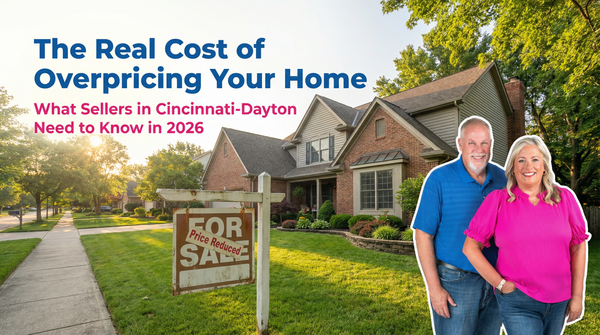
It sounds reasonable. It feels like a protective strategy. And in most cases, it backfires — not because the home isn't worth it, but because buyers don't negotiate down from overpriced listings. They move on.
If you're preparing to sell and you want to maximize what you walk away with, the conversation about price is the most important one you'll have before you list. Here's how we think about it — and how we guide our clients through it.
Why Pricing High Doesn't Protect You (It Usually Hurts You)
Let's start with what buyers actually do when they see an overpriced home.
They don't offer less. They click away. Or they show up, mentally check out, and move on to the next listing. The ones who do make offers on overpriced homes often come in low — because the longer a listing sits, the more leverage shifts to the buyer.
In the Cincinnati–Dayton market right now, days on market matters. A home that goes live at the right price, generates strong early traffic, and holds multiple showings in the first two weeks tells a story of demand. A home that sits for 45 days before a price reduction tells a very different story — even if the final sale price ends up exactly where the right price would have been from the start.
The difference? Negotiating position, buyer confidence, and often, the final number on the settlement sheet.
What "Leading the Market" Actually Means
We use a specific phrase with our clients: "Price it to lead the market, not chase it."
That doesn't mean pricing low. It means pricing at the front edge of where the market is right now — not where it was in 2021, not where a neighbor listed last fall, and not at a number that feels right without data to back it.
Leading the market means your home is the one buyers see and think: "This is priced well. We should move fast." That psychology — urgency driven by perceived value — is exactly what produces strong offers, shorter time on market, and in competitive situations, multiple offers.
Here's what we use to get there:
Current local days on market. Not regional averages. We look at what's actually happening in your specific price range and neighborhood right now. In Monroe Crossings, Foxborough, or Shaker Run, that data tells a different story than broader West Chester or Mason stats.
Active price reductions. When we see a cluster of listings in your range sitting with price cuts, that's a signal the market has adjusted and sellers are catching up. You don't want to start where they are.
Absorption rate. How quickly are homes in your price tier actually selling? One month of inventory means something very different than four months.
Buyer behavior signals. Online views, showings per listing, time between list and contract — these are real-time indicators of demand.
We use this data to have an honest pricing conversation with every seller we work with. Not to tell you what you want to hear, but to show you what the market is telling us.
The Conversation Most Agents Skip
Here's something we've noticed: a lot of sellers tell us their previous agent (or an agent they interviewed) just agreed with their price.
That's not strategy. That's avoiding conflict.
An agent who agrees to list your home at an unrealistic number isn't protecting your equity — they're protecting their listing. Because once you're under contract, you're committed. And if the number was wrong from the start, you'll find out the hard way: through a slow launch, an eventual price reduction, or an appraisal that comes in short and threatens to unravel the deal.
We'd rather have the harder conversation upfront. Our job is to tell you what we'd do if it were our house — because we genuinely believe that protecting your outcome matters more than making you feel good on signing day.
That said, pricing is also not ours to dictate. One of the things we tell every seller:
"We own the marketing. You own the pricing. But in the end, neither of us is buying the house — so let's price it for the buyers who will."
Strategic Prep as Part of Your Pricing Position
Price isn't the only thing buyers are evaluating when they see your listing. Condition and presentation are doing real work too.
A home that shows beautifully — professionally photographed, well-prepped, clean, and staged to emphasize what buyers in your neighborhood actually want — can command a stronger price than a comparable home that didn't invest in those steps.
Part of our process is walking through your home before we price it. We identify the highest-ROI prep items — what's worth doing, what isn't, what will matter to buyers and what won't — and we connect you with vetted contractors we trust to get it done at a fair price.
That strategic prep conversation directly informs where we price. A home that's truly move-in ready and marketed exceptionally well earns more latitude in pricing than one with deferred maintenance and dated photos.
What This Looks Like in Practice
A client came to us last year ready to list their home in Monroe — they'd owned it for twelve years and had strong equity. They'd done some updates, but their previous agent (from a prior attempt to sell) had suggested starting at a number based on what they hoped to net, not what the market supported.
That listing had expired after 60+ days with no offers.
When we walked through the home, we identified three prep priorities, connected them with one of our contractors, and invested about four weeks getting it right. We priced it with current data — not their previous number, and not a lowball. We launched with professional photography, reverse prospecting to identify likely buyers in the area, and two open houses with door-hanger invitations to the neighborhood.
It went under contract in eight days. Final sale price was within 1.2% of list.
The difference wasn't magic. It was correct pricing, backed by preparation and a real marketing strategy.
Frequently Asked Questions About Pricing Your Home to Sell in Cincinnati–Dayton
Should I price my home high to leave room to negotiate? Starting high typically reduces early buyer interest, extends your days on market, and can result in a lower final price than if you had priced accurately from the start. Buyers who encounter overpriced listings usually move on rather than negotiate down.
How do you determine the right price for my home? We use current local data specific to your price range and neighborhood — including days on market, active price reductions, absorption rate, and recent comparable sales. We don't rely on 2021 pricing or regional averages that don't reflect your street.
What if I disagree with the price you recommend? Pricing is ultimately your decision — we're here to advise, not dictate. We'll show you the data, explain our reasoning, and make sure you understand the tradeoffs. From there, you decide. Our job is to give you the clearest picture possible.
How does home preparation affect my pricing? Condition and presentation directly influence what buyers are willing to pay. A well-prepped, professionally marketed home can support a stronger price and shorter market time than a comparable home that didn't invest in those steps.
Is it too late to price correctly if my home has already been sitting on the market? Not always. A strategic reset — with updated preparation, fresh marketing, and a price that reflects where the market actually is — can reactivate buyer interest. We've helped sellers relaunch listings that had gone stale and get them sold.
The Takeaway
Pricing your home well isn't about being aggressive or conservative. It's about being accurate — and backing that accuracy with a marketing strategy that ensures the right buyers actually see your home and have a reason to act.
In the Cincinnati–Dayton corridor, we work with sellers who are equity-rich and outcome-focused. They don't want to leave money on the table. Neither do we. The path to protecting that equity starts with a pricing conversation that's grounded in real data, real prep, and a realistic read of what buyers in your specific market are doing right now.
If you're thinking about listing in Monroe, Mason, West Chester, Lebanon, Springboro, or anywhere in the Cincinnati–Dayton area and want a clear-eyed pricing conversation before you commit to anything, we'd be glad to walk through it with you. No pressure, no obligation — just the honest conversation you deserve before making one of the biggest financial decisions of your life.
[Reach out here to schedule a conversation →]
🌸 "Scott and Jill didn't just tell us a price — they showed us exactly why. We understood every step, felt confident going in, and sold in eight days. We couldn't have asked for more." — Monroe Seller, 2024