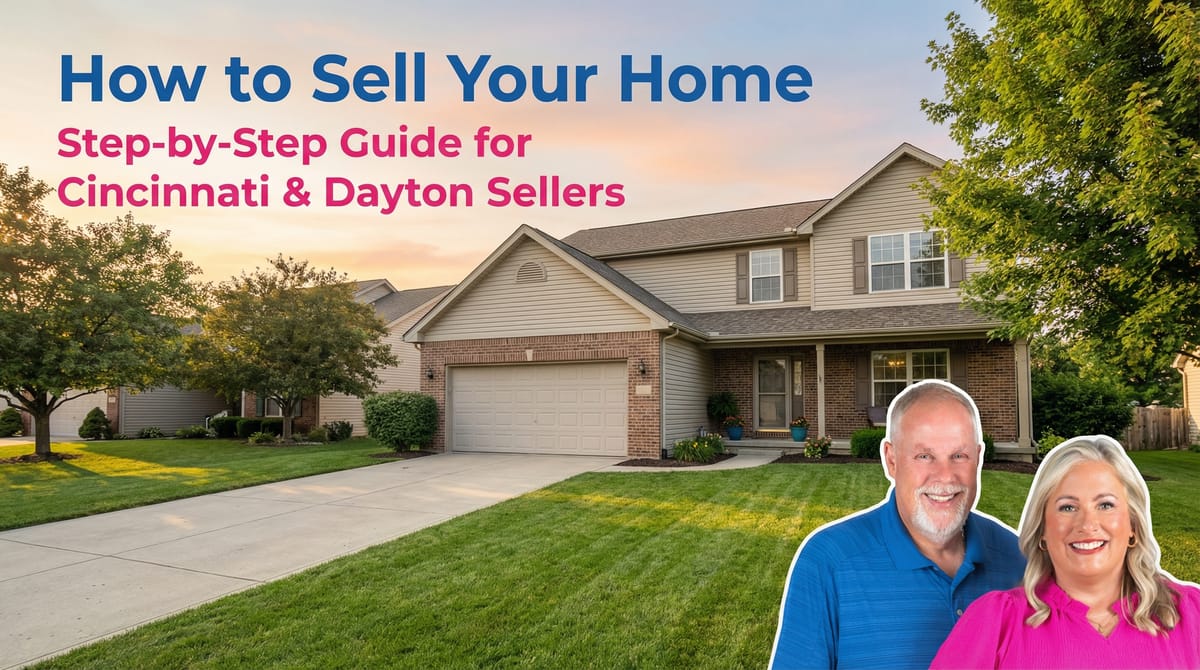
How Do I Sell My Home in Cincinnati or Dayton, Ohio?
Selling a home in the Cincinnati–Dayton corridor takes more than a sign in the yard. Here's the honest, step-by-step guide to doing it right — from pricing through closing — with Scott & Jill Ferguson.
Most homeowners start asking this question months before they're ready to do anything about it. They're not impulsive. They've owned a home before. They know the stakes — and they want to get this right.
If that sounds like you, this guide is written for exactly where you are right now: informed enough to ask good questions, experienced enough to know that the difference between a smooth sale and a stressful one often comes down to preparation and the team you choose.
Here's a clear, honest look at what selling a home in the Cincinnati–Dayton corridor actually involves — and how to do it well.
Step 1: Get Clear on Your Goals Before You Do Anything Else
Before pricing, before photography, before any of it — the most valuable thing you can do is get honest with yourself about what you actually need from this sale.
Are you downsizing after the kids left? Moving for a job? Navigating a life transition that makes timing sensitive? Each situation calls for a different strategy. A seller who needs to move within 60 days makes different decisions than one who can wait for the right offer.
When we sit down with sellers for the first time, we're not just running comps. We're asking questions: What does success look like for you? What's your timeline? Are you also buying? Do you have flexibility on possession? The answers shape everything — pricing, prep decisions, how aggressively we market, and how we approach negotiations when offers come in.
Getting clear on your goals isn't a soft exercise. It's the foundation of a strategy that actually works.
Step 2: Understand What Your Home Is Actually Worth in This Market
Online estimates — Zestimates, instant offers, automated valuations — are a starting point at best. In the Cincinnati–Dayton corridor, home values can vary significantly from one neighborhood to the next, and sometimes from one street to another.
A home in Monroe Crossings prices differently than a comparable home in Springboro, even at similar square footage, because of school districts, lot sizes, community amenities, and buyer demand patterns in each area. A well-presented home on a premium lot in Foxborough will attract a different buyer pool than one backing to a busy road three streets away.
What you actually need is a Comparative Market Analysis built on current, local data — not averages from across the metro, and definitely not what your neighbor got in 2021.
We anchor pricing conversations around what's happening right now: days on market, price reductions, active competition, and buyer behavior in your specific neighborhood. Our philosophy is simple: price it to lead the market, not chase it. Homes that are priced right from the start attract more buyers, generate more urgency, and ultimately sell for more than homes that start too high and require reductions.
Step 3: Prepare Your Home Strategically — Not Expensively
You don't need to renovate. You need to present.
The sellers who get the strongest results aren't always the ones who spent the most on updates — they're the ones who made smart, targeted decisions about what buyers in this market actually respond to.
We walk every home before it lists. We'll tell you honestly what to address and what to skip. Fresh paint in a neutral palette, clean landscaping, decluttered spaces, good lighting — these are the things that move buyers online and in person. A new primary bathroom suite rarely pays for itself. New mulch and a pressure-washed driveway often do.
We also have a network of vetted contractors we trust — painters, handymen, cleaners — who can turn around quality work quickly and at fair prices. You won't be searching for someone reliable at the last minute.
The goal of preparation isn't to make your home look like someone else's. It's to help the right buyer see themselves in it immediately.
Step 4: Launch with a Marketing Plan That Actually Finds Buyers
This is where the difference between agents becomes most visible — and most consequential.
Every home we list goes through our 150+ point marketing plan. That's not a tagline. It's a documented process that includes professional photography, compelling listing copy, targeted social media promotion, geo-farm outreach to the surrounding neighborhood, and reverse prospecting — actively identifying agents who have buyer clients that match your home's profile, and reaching out to them directly.
We don't wait for buyers to find your listing. We go find them.
Every listing also includes two planned open houses, with door-hanger invitations delivered to the surrounding neighborhood. We want the people most likely to know a potential buyer — your neighbors — to be informed and involved.
And from the moment your home goes live, you'll receive weekly performance reports: how many views, how many clicks, how many showings, and what buyers said after each one. You'll never have to wonder what's happening with your listing.
"Scott and Jill were incredibly organized from start to finish. I always knew what was happening — the weekly reports were genuinely helpful, not just a formality. Our home sold in 11 days and we felt confident the whole way through."
— Seller in West Chester, OH
Step 5: Navigate Offers with Strategy, Not Emotion
When offers arrive, price is only one part of the picture. Financing type, contingencies, closing timeline, possession flexibility, lender strength — all of these factors affect how much you actually walk away with and how smoothly the transaction closes.
Scott leads this part of the process. He's negotiated hundreds of offers across the Cincinnati–Dayton market and understands how to evaluate a full offer package — not just the number on the first page. If multiple offers come in at once (which happens more often than people expect for well-prepared, well-priced homes), we'll walk you through them side by side so you can make a clear, informed decision.
The goal isn't to accept the first offer. It's to accept the right one.
Step 6: Get Through Inspections and Appraisal Without Losing the Deal
For many sellers, the inspection is the most stressful part of the transaction — because it feels like things are suddenly out of their control.
They're not. But you need someone in your corner who knows how to respond, not just react.
Scott has deep, practical knowledge of how homes are built and what actually needs to be addressed versus what's standard wear and the buyer's responsibility to accept. Not every item on an inspection report warrants a credit or a repair. We help sellers distinguish between what's reasonable to address and what isn't — and we negotiate from that position with calm, clear confidence.
On the appraisal side, pricing your home accurately from the beginning is the best protection against a low appraisal. If your home is positioned correctly and supported by solid comps, appraisal issues are far less common than sellers fear.
Closing in the Cincinnati–Dayton area typically runs 30 to 45 days. We communicate with you at every milestone so nothing catches you off guard.
Step 7: Close — and Know What Comes Next
Once the sale closes, your equity is yours. If you're also buying, that's a whole conversation we have early in the process — how to sequence the sale and purchase so you're not living in a hotel in between, how to protect your negotiating position on the buy side, and how to avoid the common mistakes that complicate simultaneous transactions.
We've helped families navigate all of it: selling the house they raised their kids in, buying a new home in the country, and even helping a parent sell so she could move closer to family — three transactions, one relationship, because trust was built at every step.
If you're relocating out of the area, we can connect you with a trusted agent in your destination market through our referral network.
"We were nervous about selling and buying at the same time — it felt like a lot to manage. Jill laid out the whole process before we even signed anything. We knew what to expect at every step, and when things got complicated at inspection, Scott handled it without us ever feeling panicked."
— Move-up Seller in Monroe, OH
What Makes the Cincinnati–Dayton Market Worth Understanding
The corridor between Cincinnati and Dayton remains one of the more stable and active residential markets in Ohio. Communities like West Chester, Mason, Monroe, Lebanon, Springboro, and Liberty Township attract buyers because of strong school districts, reasonable commutes, and a quality of life that's hard to replicate at the price points available here.
Homes in well-maintained neighborhoods — particularly Monroe Crossings, Foxborough, and Shaker Run — continue to attract motivated, qualified buyers. Days on market in these areas tend to track below regional averages when homes are prepared and priced correctly.
That local knowledge isn't something you find in a national algorithm. It comes from living and working in this community, knowing which streets move fastest, and understanding what buyers are actually saying after they walk through a home.
Frequently Asked Questions About Selling a Home in Cincinnati or Dayton
How long does it typically take to sell a home in the Cincinnati–Dayton area?
Well-priced, well-prepared homes in communities like West Chester, Mason, and Monroe typically sell within two to four weeks. Homes that require price reductions often take two to three times longer and net less than if they'd been priced correctly from the start.
Can I sell my home if I still have a mortgage?
Yes. Your remaining mortgage balance is paid off at closing from the sale proceeds. Your net equity — what's left after the payoff, closing costs, and fees — comes to you. We walk every seller through a net proceeds estimate before listing so there are no surprises.
Do I need to make repairs before listing?
Targeted cosmetic updates almost always pay off. Major renovations often don't. We'll walk through your home and give you an honest assessment of what to address and what to leave alone — with specific contractor referrals if work is needed.
When is the best time of year to sell in Cincinnati or Dayton?
Spring and early fall are traditionally the most active seasons, but the right time is when your home is truly ready. A well-prepared home launched in January will outperform an unprepared home launched in April every time. Our Ready, List, Sell process helps you get there on your timeline.
What costs should I expect as a seller in Ohio?
Typical seller costs include real estate commissions, title and transfer fees, and prorated property taxes. All-in, sellers in Ohio generally pay 5–8% of the sale price in closing costs. We provide a detailed estimate before you list so you can plan your next move with confidence.
What if I need to sell and buy at the same time?
This is one of the most common situations we navigate with clients. It takes sequencing, clear communication, and a plan for contingencies. We'll map out the full picture with you before anything is signed so you understand how the pieces fit together.
Thinking About Selling? Let's Talk Through Your Situation.
Selling your home is one of the biggest financial decisions you'll make — and getting the strategy right from the beginning matters more than most people realize.
If you're thinking about listing in West Chester, Monroe, Mason, Springboro, Lebanon, or anywhere in the Cincinnati–Dayton corridor, we'd be glad to sit down and walk through your specific situation. No pressure, no obligation — just an honest conversation about what the process looks like and what you can realistically expect.
Reach out anytime. We're happy to start with a question.
This content is for informational purposes only and does not constitute legal, tax, or financial advice. Real estate transactions are subject to federal and state law, including the Fair Housing Act, RESPA, and standards established by the Ohio Real Estate Commission and the National Association of REALTORS®. Please consult licensed professionals for guidance specific to your situation.