The Best Suburbs in the Dayton Area for Sellers (and Buyers) in 2026
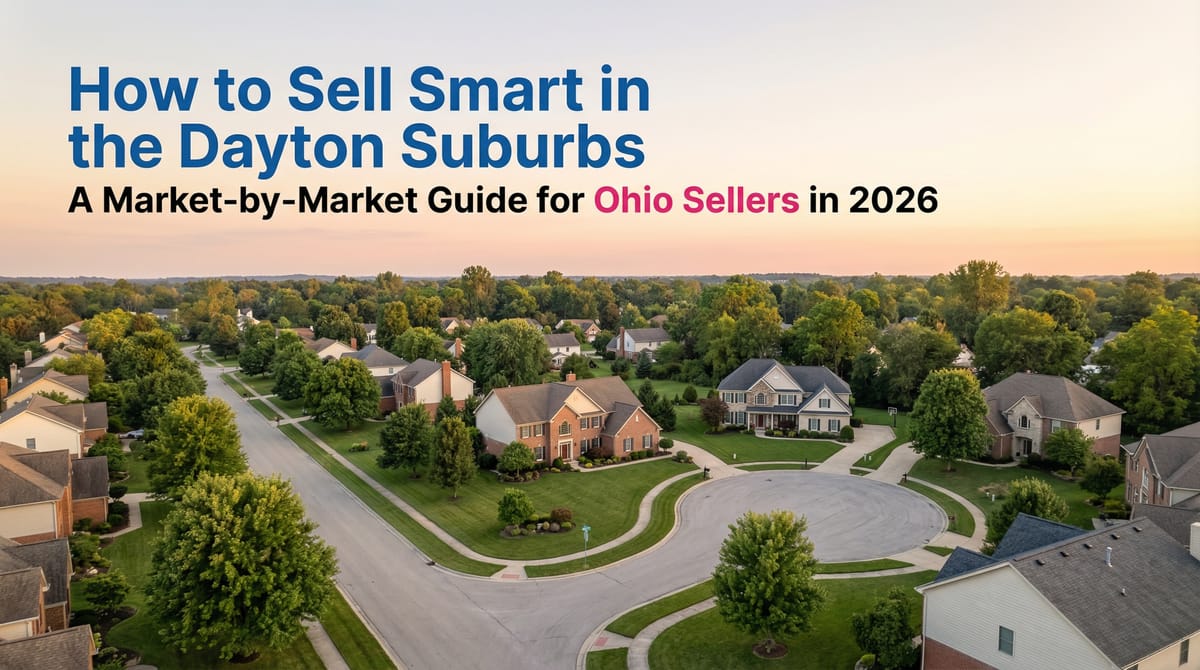
If you own a home in the Dayton suburbs and you're weighing your next move in 2026, this is where the market actually stands — by neighborhood, by price range, and by what buyers are prioritizing right now.
Most "best suburbs" lists are written for people moving to Dayton from somewhere else. They rank school ratings and commute times and call it a day.
This one is different.
If you already live in one of these communities — and you're thinking about what your home is worth, whether now is a good time to sell, or how to position yourself for a move-up or downsizing — this is the read you've been looking for.
We're Scott and Jill Ferguson, and we work with sellers (and buyers) throughout the Dayton and Cincinnati corridor. Here's what we're actually seeing on the ground in 2026 across the suburbs people ask us about most.
Springboro: Still One of the Most In-Demand Markets in the Region
Springboro continues to attract serious buyers — and for sellers, that sustained demand is worth understanding.
The community sits at the intersection of Warren County quality of life and access to both Dayton and Cincinnati, which gives it an unusually wide buyer pool. Buyers relocating from Columbus, Indianapolis, or out of state frequently land here because it checks multiple boxes at once: strong schools, established neighborhoods, newer construction options, and a small-town feel without the isolation.
For sellers in Springboro, the question is less "will my home sell" and more "how do I make sure I capture full value?" In a market with real buyer interest but also real buyer scrutiny, pricing strategy and presentation matter. Homes that are priced to lead the market and prepared thoughtfully tend to move efficiently. Homes that test the ceiling tend to sit — and in a market like Springboro, days on market get noticed.
If you're in Springboro and wondering what your home is worth in today's market, get a clear picture here.
What sellers here need to know in 2026: Buyer expectations are high. Professional photography, compelling marketing, and a realistic pricing conversation upfront all matter more than they did three years ago.
Centerville: Established, Stable, and Still Moving
Centerville represents something that's genuinely valuable in a real estate market: predictability. Its neighborhoods are established, its buyer profile is consistent (often families and professionals who've done their homework), and its homes hold value well over time.
For sellers here, the nuance is around condition and presentation. Centerville buyers tend to be experienced — they've looked at a lot of homes, they know what things cost, and they're not easily impressed by cosmetic staging that doesn't reflect a home's actual condition. That's actually a good thing if you approach the listing correctly.
What works in Centerville: honest, strategic preparation that addresses the things buyers will notice — and confidently skips the things they won't. Scott's background in construction and inspection negotiation means we can help you figure out which pre-listing investments actually move the needle and which ones don't.
What sellers here need to know in 2026: Buyers in Centerville are comparative shoppers. Your home will be weighed against every other listing in the neighborhood. A clear pricing conversation and a polished launch matter.
Beavercreek: Strong Demand Near Wright-Patterson — With Inventory Nuance
Beavercreek benefits from proximity to Wright-Patterson Air Force Base, which creates a consistent stream of relocating buyers on defined timelines. That buyer pool tends to be motivated and pre-approved — which is useful context for sellers.
The inventory picture in Beavercreek has continued to evolve. Some price ranges see healthy competition; others are more balanced. If you're selling in Beavercreek, understanding where your home sits within the local price band — and what comparable homes have actually sold for (not just listed for) — is the starting point for every good decision.
What sellers here need to know in 2026: The military relocation buyer is a real and active segment of the Beavercreek market. A well-positioned, move-in-ready home in the right price range can move quickly.
Lebanon and Turtlecreek Township: Where Equity-Rich Sellers Are Paying Attention
Lebanon and the surrounding Turtlecreek Township area are generating real interest from a specific kind of seller: equity-rich homeowners who bought years ago, have seen significant appreciation, and are now evaluating their options — whether that's moving to something smaller, relocating, or transitioning to a property with more land.
This is a market where the homes we tend to work with are in the $450K–$750K range, and the sellers are often navigating something more complex than a simple sale. They're downsizing from a home they've raised a family in. They're selling and buying simultaneously. They have real equity to protect — and they're not willing to leave it on the table by choosing the wrong strategy or the wrong agent.
For sellers in Lebanon and Turtlecreek Township, the conversation we have starts with understanding your goals, not just your home's square footage.
What sellers here need to know in 2026: The buyer pool for this area includes people moving out of the suburbs who want more space — and that's a different buyer than the move-up buyer in West Chester or Mason. Knowing who you're selling to shapes everything from pricing to preparation to how we market the property.
Monroe and the Butler County Edge: A Market in Transition
Monroe sits at the northern edge of Butler County and continues to evolve as a community. For sellers in Monroe — particularly in neighborhoods like Monroe Crossings and Foxborough — the story in 2026 is one of positioning.
These are neighborhoods with real equity in them. Homes here in the $500K–$900K range require a different level of marketing than a typical suburban listing. Buyers at this price point are deliberate and detail-oriented. They will compare your home's online presentation to every other listing they've seen. They will notice if the photography is average or the pricing seems unclear.
We know these neighborhoods specifically — having listed and sold homes in Monroe Crossings and Foxborough, and having deep familiarity with what buyers here are prioritizing. That local knowledge isn't incidental; it shapes how we price, prepare, and present every listing in this corridor.
What sellers here need to know in 2026: At the $500K–$900K price point, marketing quality is a competitive differentiator. The homes that look exceptional online attract the right buyers. The ones that don't tend to sit and reduce.
What All of These Markets Have in Common in 2026
Across every suburb in the Dayton area, the pattern we're seeing is consistent: well-prepared, well-priced homes are moving; overpriced or under-marketed homes are sitting.
That's not a criticism of sellers. It's a market reality. Buyers in 2026 have access to more information than ever. They've seen price reductions. They've watched days-on-market data. They know when a home is priced to lead versus priced to test — and they respond accordingly.
The sellers who come out of this market with full value are the ones who start with a clear strategy: a realistic pricing conversation grounded in current local data (not 2021 comps), thoughtful preparation that addresses the right things, and marketing that puts the home in front of the right buyers from day one.
That's the work we do.
What This Looks Like in Practice
A family in Springboro recently reached out after watching a neighbor's home sit for 60+ days. Their home was similar in size and condition — and they were worried they'd have the same experience.
When we walked through the property together, the issue wasn't the home. It was the approach the neighbors had taken: priced too high at launch, photography that undersold the space, and no real buyer outreach strategy beyond putting it on the MLS.
We helped this family develop a realistic pricing position based on what buyers were actually paying — not what sellers were hoping to get. We executed a full marketing launch, including reverse prospecting to identify likely buyers already in the area, two open houses with neighborhood door-hanger invitations, and weekly performance reports so they knew exactly what was happening every step of the way.
The home sold at a price they felt good about. More importantly, they felt informed and in control throughout the process — which is what a well-run listing should feel like.
Frequently Asked Questions: Selling in the Dayton Suburbs in 2026
Is 2026 a good time to sell a home in the Dayton suburbs? It depends on your situation and your specific neighborhood. The market in most Dayton-area suburbs remains active, but it's more nuanced than it was in 2020–2022. Homes that are priced correctly and marketed well are still selling efficiently. The sellers who struggle are typically those who price based on what the market was — not what it is now.
Which Dayton suburb has the strongest seller's market right now? Springboro and Beavercreek continue to see consistent buyer demand. Lebanon and Monroe are generating strong interest at higher price points from equity-rich sellers. The "strongest market" for you depends on your price range, your home's condition, and your timing — a conversation we're happy to have.
How do I know if my home is priced right for the current market? Current days-on-market data, recent sold prices (not list prices), and active inventory levels all inform a realistic pricing conversation. We use current local data — not 2021 comps — to recommend a strategy that positions your home to lead the market, not chase it.
What do buyers in the Dayton suburbs prioritize in 2026? Condition, presentation, and price alignment. Buyers at most price points in this market are comparison shopping carefully. Homes that show well online and are priced with clear logic relative to recent sales tend to attract serious buyers quickly. Homes that don't meet those benchmarks tend to sit.
Do I need to renovate before I sell? Not always — and often, the wrong renovations can cost more than they return. The question is which improvements actually move buyers in your specific market and price range. That's a conversation worth having before you spend anything.
"Scott and Jill made what felt like an overwhelming process completely manageable. They were honest about pricing from the start, the marketing was exceptional, and we always knew exactly where things stood. We couldn't have asked for a better experience." — Seller in Springboro, OH
If you're thinking about selling in Springboro, Centerville, Beavercreek, Lebanon, Monroe, or anywhere else in the Dayton–Cincinnati corridor and want a clear picture of where your home stands in 2026, we'd be glad to talk through your situation.
No pressure, no obligation — just a straightforward conversation about your options. Reach out here whenever you're ready.
"We had interviewed two other agents before meeting Scott and Jill. It was immediately clear they had a more detailed plan and a better understanding of our neighborhood. They did everything they said they would — and then some." — Seller in Lebanon, OH
Scott & Jill Ferguson are REALTORS® with Spouses Who Sell Houses at Real Broker (REAL of Ohio), serving the Cincinnati–Dayton corridor. This post reflects general market observations and is not a guarantee of outcome. Individual results vary based on property condition, location, timing, and market conditions.